

ICC 2025: saliva still banned, ball change by umpire discretion, ODI ball rule tweak. See what changed and the penalties for ball tampering.
⚡Quick Summary
In 2025, the ICC kept the saliva ban, but changed how it’s enforced.
Now, umpires no longer have to replace the ball every time saliva touches it.
It’s their discretion — they’ll only change it if the ball’s condition clearly alters or gives an unfair advantage.
Plus, Men’s ODIs will now use two balls until over 34, then one ball from overs 35–50.
That means reverse swing is back, and so is closer scrutiny on how the ball is maintained.
Ball-tampering remains a serious offence — expect five penalty runs, possible ball replacement, and match bans for offenders.
🏏 Why This Update Matters
Players & Coaches:
Knowing what’s legal is crucial — especially in death overs where the ball gets old and tempting.
Fans & Analysts:
You’ll notice more talk about reverse swing and how bowlers manage the old ball.
Umpires & Officials:
They now have more discretion instead of following rigid “automatic replacement” rules.
🔄 What’s Actually New in 2025
🧴 1. Saliva Still Banned — But Ball Change is Optional
Using saliva is still prohibited.
The change? Umpires can now decide whether the ball needs replacing.
If the ball’s condition isn’t affected, play continues.
If it’s noticeably altered, the ball is swapped out.
This stops teams from intentionally forcing a ball change by minor “accidents.”
💡 Tip: Even a “small slip” counts — so teams must brief fielders carefully.
🏐 2. ODI Format: Back to One Ball for the Final 16 Overs
From July 2025, ODIs will use:
- Two new balls (each end) until over 34
- Then one chosen ball for overs 35–50
This means one older ball gains natural wear — a key factor in reverse swing.
But it also means umpires will watch ball condition closely, since that single ball decides the endgame.
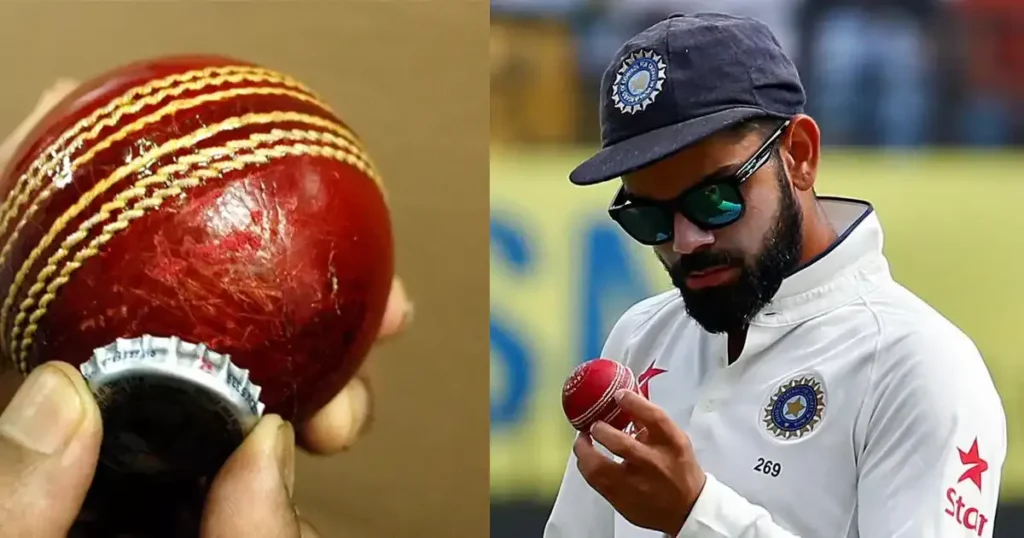
⚖️ What Counts as Ball-Tampering
According to MCC Law 41 (Unfair Play):
“Any action likely to alter the ball’s condition” is an offence.
Allowed:
- Polishing with sweat (no substances)
- Removing mud under umpire supervision
- Drying with an approved towel
Not allowed:
- Using saliva
- Scratching or picking seams
- Rubbing the ball on rough surfaces
- Using any external substance
If caught, umpires:
- Award five runs to the opposition
- Replace the ball (if needed)
- Report the player
🚨 Penalties in 2025
⚾ On-Field
- 5 penalty runs to the opposition
- Possible ball replacement
- Umpires file an official report
⚖️ ICC Code of Conduct
Ball-tampering = Level 3 offence.
That means suspension points, match bans, and possible fines.
A Level 3 offence can earn:
- Minimum four suspension points (≈ two Tests or four limited-overs matches)
- Repeat offences = longer bans
Even minor infractions (Level 1) add demerit points that stack up fast.
📊 2024 vs 2025: Quick Comparison
| Topic | 2024 | 2025 | Why It Matters |
| Saliva use | Banned; automatic ball change | Banned; umpire discretion | Prevents misuse of “forced” changes |
| ODI balls | Two new balls for entire innings | Two until 34 overs, then one | Restores natural wear & reverse swing |
🧩 Practical Tips for Teams
1️⃣ Assign a “ball custodian.”
A senior player should oversee ball care every spell — keep consistency and accountability.
2️⃣ Hold quick dressing-room refreshers.
Run short briefings on what’s allowed vs banned before each match.
3️⃣ Stay disciplined in the death overs.
From over 35 onwards, avoid any rough handling; one mistake = five runs + bad press.
4️⃣ Handle saliva incidents smartly.
If accidental contact happens, self-report immediately to the umpire.
Transparency builds trust and avoids harsher action.
❓ FAQs
Is saliva still banned in 2025?
Yes. The new rule just gives umpires freedom to judge if a ball change is needed.
What happens if someone tampers with the ball?
Opposition gets 5 runs, the ball may be changed, and the player faces match bans.
Why bring back one ball in ODIs?
It re-introduces natural wear and reverse swing — making the final overs more tactical.
Is reverse swing legal?
Absolutely, as long as it’s achieved through lawful ball care — not tampering.
🏁 Final Thoughts
The ICC’s 2025 rules don’t relax discipline — they refine it.
By trusting umpires’ discretion and reintroducing one ball late in ODIs, the ICC aims for a fairer balance between bat and ball.
Teams that master legal ball maintenance will now have an even bigger edge — especially in those tense last overs.
Stay smart. Play clean. Win fair.