How athletes prepare mentally for high-pressure games. Learn simple, proven ways to stay calm, focused, and confident when it matters most.
High-pressure games are where careers are defined. Finals, knockouts, last overs, penalty shootouts, match-winning moments—these situations separate average performers from elite ones. Physical skill may get you to the big stage, but mental preparation decides what happens once you’re there.
Many athletes train their bodies for years but give very little structured attention to their minds. The result? Anxiety, overthinking, fear of failure, or playing “not to lose” instead of playing to win. The truth is simple but uncomfortable: pressure does not create weakness—it exposes it.
This article breaks down what mental preparation for high-pressure games really means, why it matters more than talent in crucial moments, and how athletes at any level can build a calm, confident, competition-ready mindset.
Understanding Pressure: Why Big Games Feel Different
Pressure is not imaginary. In high-stakes games, your brain perceives threat—fear of judgment, failure, loss of reputation, or letting others down. This activates the body’s stress response, releasing adrenaline and cortisol.
In small amounts, this response can sharpen focus and reaction time. But when unmanaged, it causes:
- Tight muscles
- Shallow breathing
- Rushed decisions
- Loss of fine motor control
- Mental freezing or panic
That’s why some players look unbeatable in practice but struggle badly in important matches. The environment changes, not the skill set.
Mental preparation is about training your brain to interpret pressure as a challenge, not a threat.
The Core Principle: You Don’t Rise to the Occasion, You Fall to Your Training
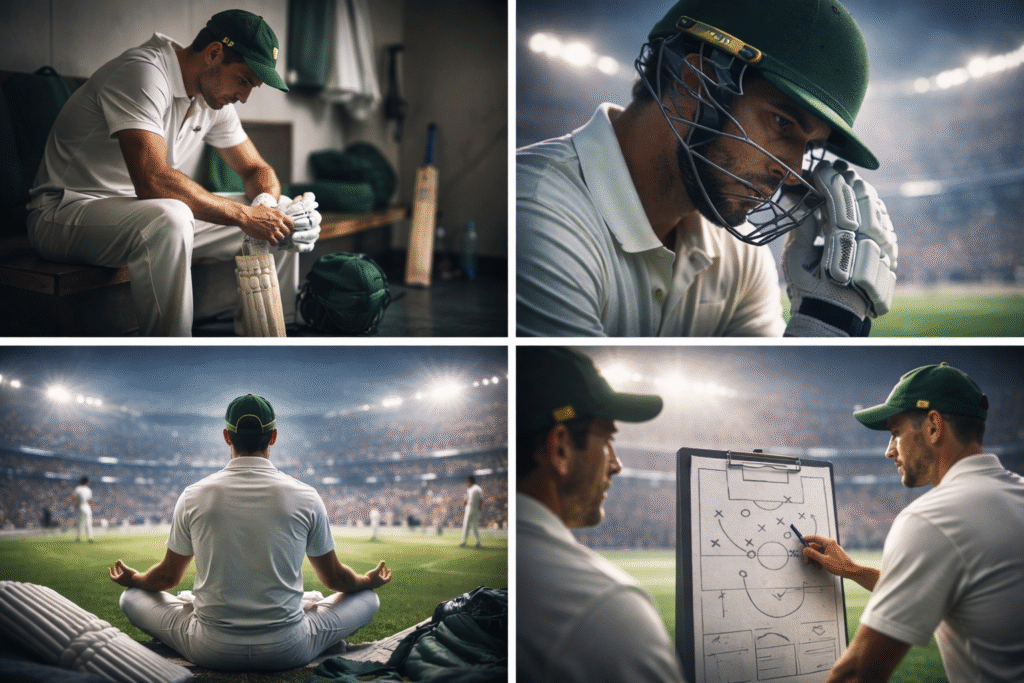
A common myth is that great players “step up” automatically in big moments. In reality, under pressure, the brain defaults to its most practiced patterns.
If you have trained:
- Calm breathing → you breathe calmly
- Focus routines → you focus
- Positive self-talk → you stay confident
If you haven’t, the brain fills the gap with doubt and fear.
Mental preparation must be intentional, repetitive, and practiced under simulated pressure—just like physical skills.
Building a Strong Pre-Game Mental Routine
Elite athletes rely on routines because routines reduce uncertainty. When the brain knows what comes next, anxiety drops.
A strong pre-game mental routine usually includes:
1. Controlled Breathing
Slow, deep breathing signals safety to the nervous system. A simple technique:
- Inhale for 4 seconds
- Hold for 2
- Exhale for 6
Repeat for 3–5 minutes before the game. This alone can dramatically reduce nerves.
2. Visualization With Emotion
Visualization is not daydreaming. It is mentally rehearsing performance with full sensory detail—crowd noise, pressure, fatigue, and success.
Effective visualization includes:
- Seeing yourself handling mistakes calmly
- Executing skills under pressure
- Staying composed in critical moments
The brain cannot fully distinguish between imagined and real experiences. This builds familiarity with pressure before it arrives.
3. Clear Process Goals
Outcome goals (winning, scoring, selection) increase pressure. Process goals reduce it.
Examples:
- “Watch the ball early”
- “Stay balanced”
- “Commit fully to each action”
High-pressure performers focus on what they can control, not what they hope will happen.
Managing Fear of Failure Without Denying It
One of the biggest mistakes athletes make is trying to “remove” fear. Fear is natural. Even the best feel it.
The goal is not to eliminate fear, but to perform effectively despite it.
Healthy mental preparation includes:
- Accepting nerves as normal
- Reframing anxiety as readiness
- Understanding that mistakes are part of competition
When athletes stop fighting fear, they free mental energy to perform.
Self-Talk: The Invisible Coach in Your Head
During high-pressure games, internal dialogue becomes louder. Negative self-talk can destroy performance faster than any opponent.
Common destructive thoughts:
- “Don’t mess this up”
- “Everyone is watching”
- “I can’t fail here”
Elite athletes train instructional and encouraging self-talk, such as:
- “Breathe, focus”
- “One moment at a time”
- “Trust the work”
Self-talk should be:
- Short
- Neutral or positive
- Action-oriented
The brain follows instructions better than criticism.
Staying Present When the Stakes Are High
Pressure pulls attention into the future—what happens if you win or lose. This destroys performance because the body only performs in the present moment.
Techniques to stay present include:
- Focusing on breathing rhythm
- Using physical cues (gripping the bat, adjusting gloves)
- Breaking the game into single actions
High-pressure success is not about heroic moments; it’s about executing simple actions repeatedly under stress.
Recovering Quickly From Mistakes
Mistakes are inevitable in pressure games. What matters is response speed.
Mentally strong athletes:
- Acknowledge the error
- Reset emotionally
- Refocus on the next task
A powerful reset routine might include:
- Deep breath
- Physical gesture (tap shoes, adjust gear)
- Verbal cue (“Next ball”, “Reset”)
This prevents one mistake from becoming two—or ten.
Confidence That Survives Pressure
Real confidence is not hype. It is built on evidence.
Mental preparation strengthens confidence by:
- Reviewing past successes
- Acknowledging preparation effort
- Trusting training, not hope
Confidence is fragile when it depends on results. It is strong when it depends on work done before the game.
That’s why experienced athletes often look calmer than younger, equally talented players. They trust their preparation.
Training the Mind Like the Body
Mental preparation is not a one-day activity. It must be trained consistently.
Effective methods include:
- Mindfulness training (5–10 minutes daily)
- Pressure simulations in practice
- Journaling performance thoughts
- Working with a sports psychologist when possible
Just as muscles adapt to stress, the mind adapts to pressure—if trained correctly.
Why Mental Preparation Wins Championships
At elite levels, physical differences are minimal. Mental strength becomes the deciding factor.
High-pressure games reward athletes who:
- Stay calm under chaos
- Make clear decisions when tired
- Trust themselves when fear appears
- Respond, not react
Mental preparation doesn’t guarantee victory—but without it, victory becomes accidental rather than repeatable.
Final Thoughts: Pressure Is a Privilege
Pressure exists only where something meaningful is at stake. High-pressure games mean you are exactly where many dream of being.
The best performers don’t avoid pressure—they prepare for it.
By training the mind with the same seriousness as the body, athletes turn pressure into fuel rather than fear. And when the moment arrives, they don’t hope to perform—they expect to.